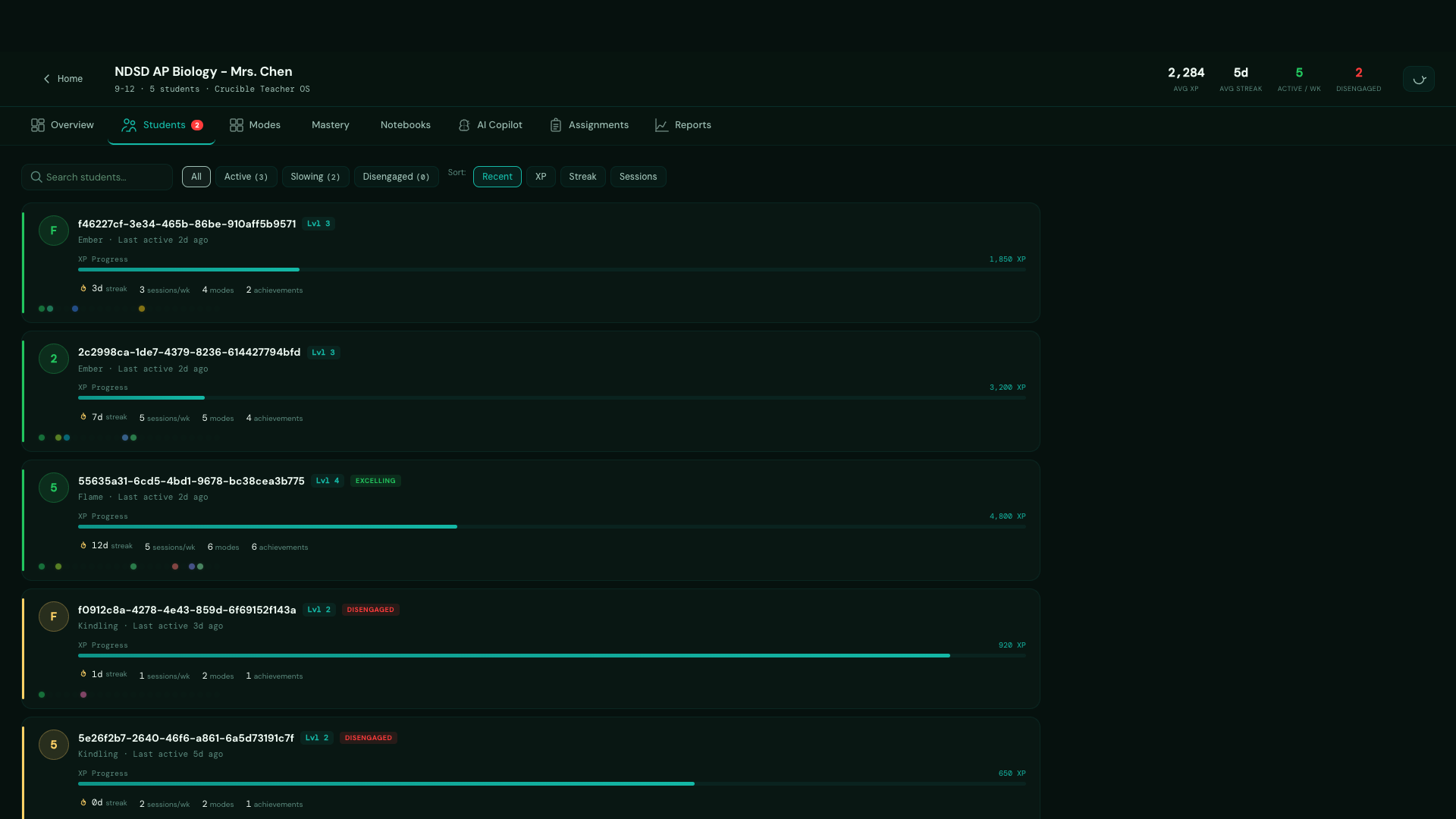
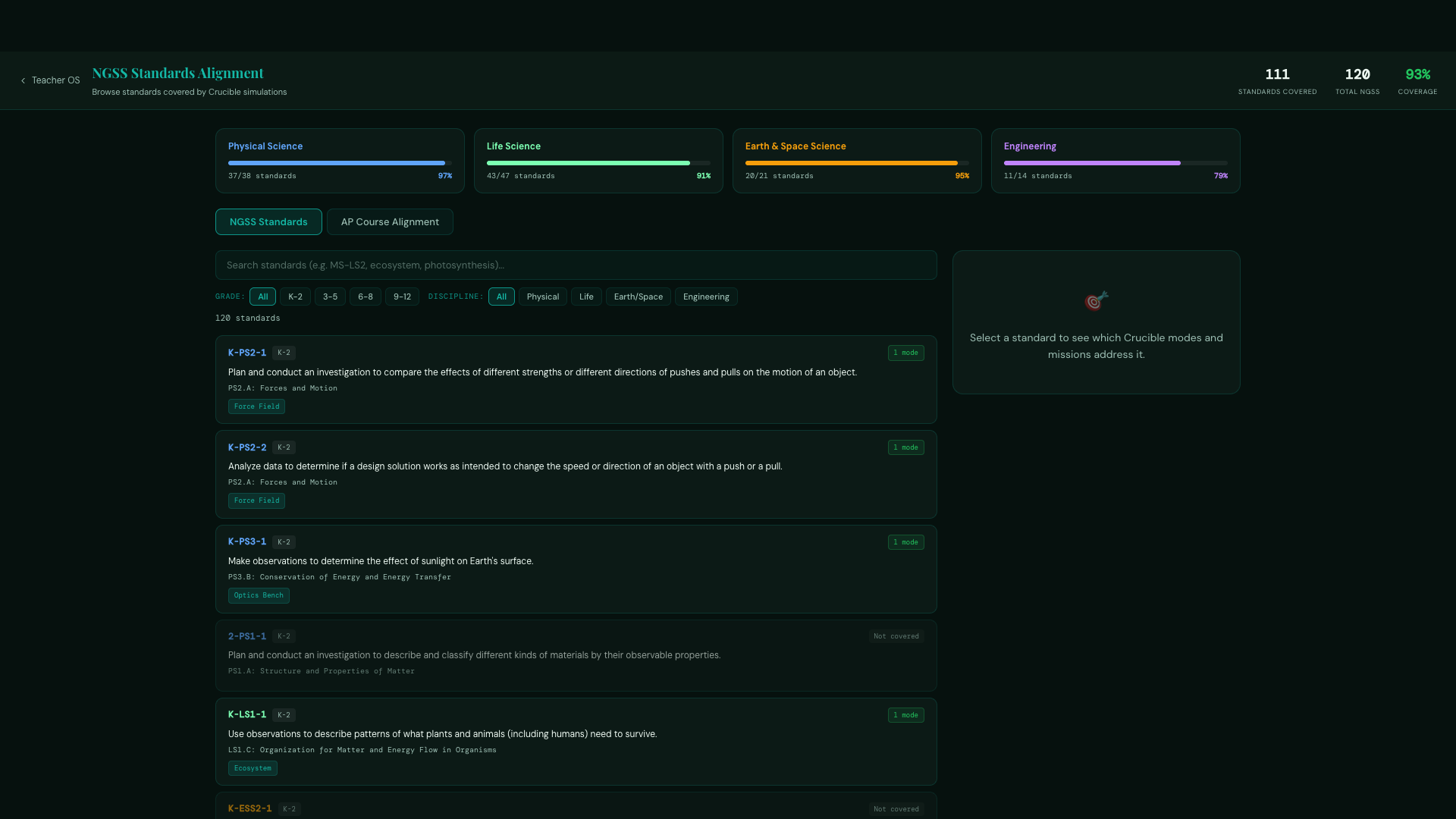
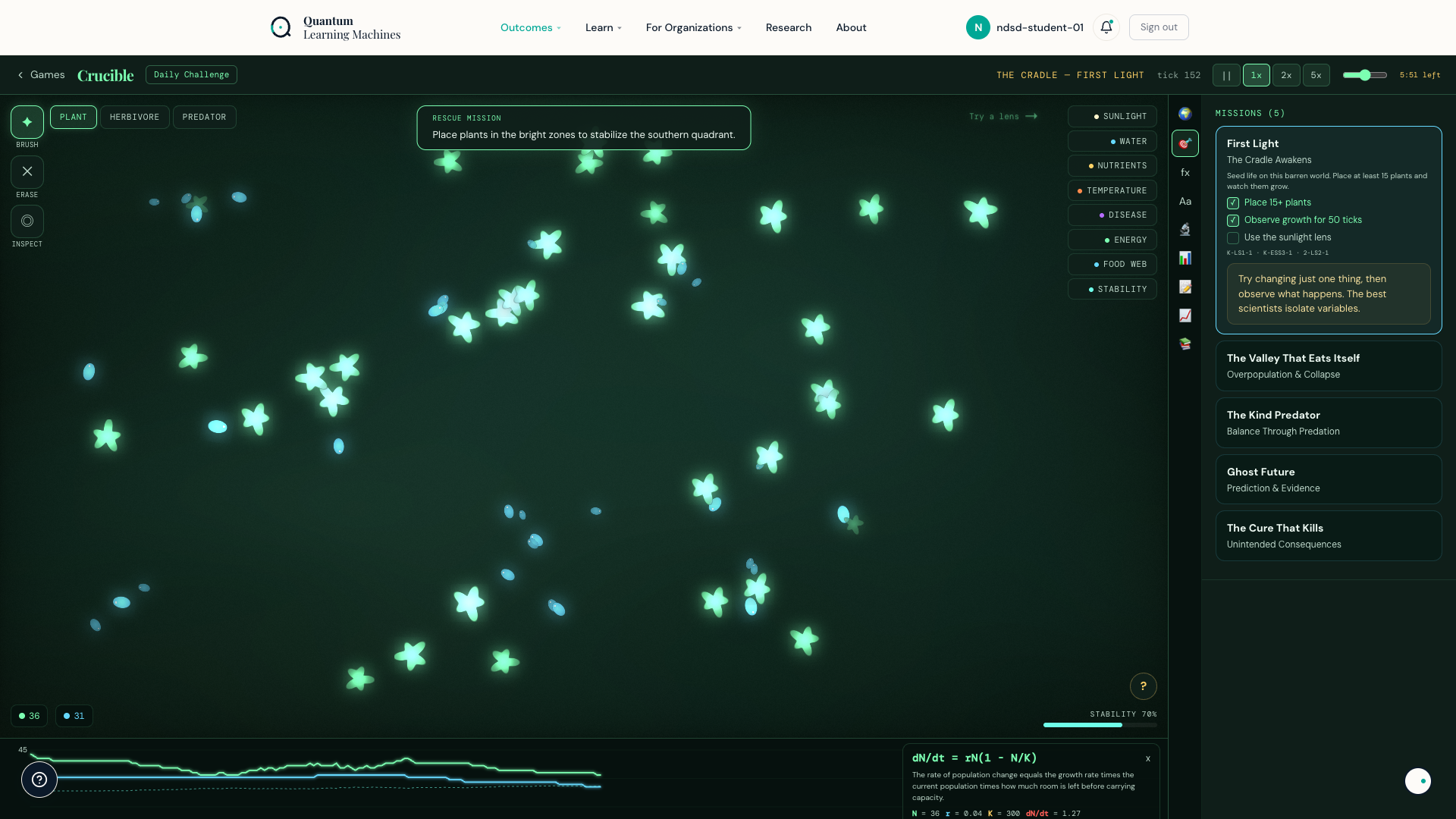
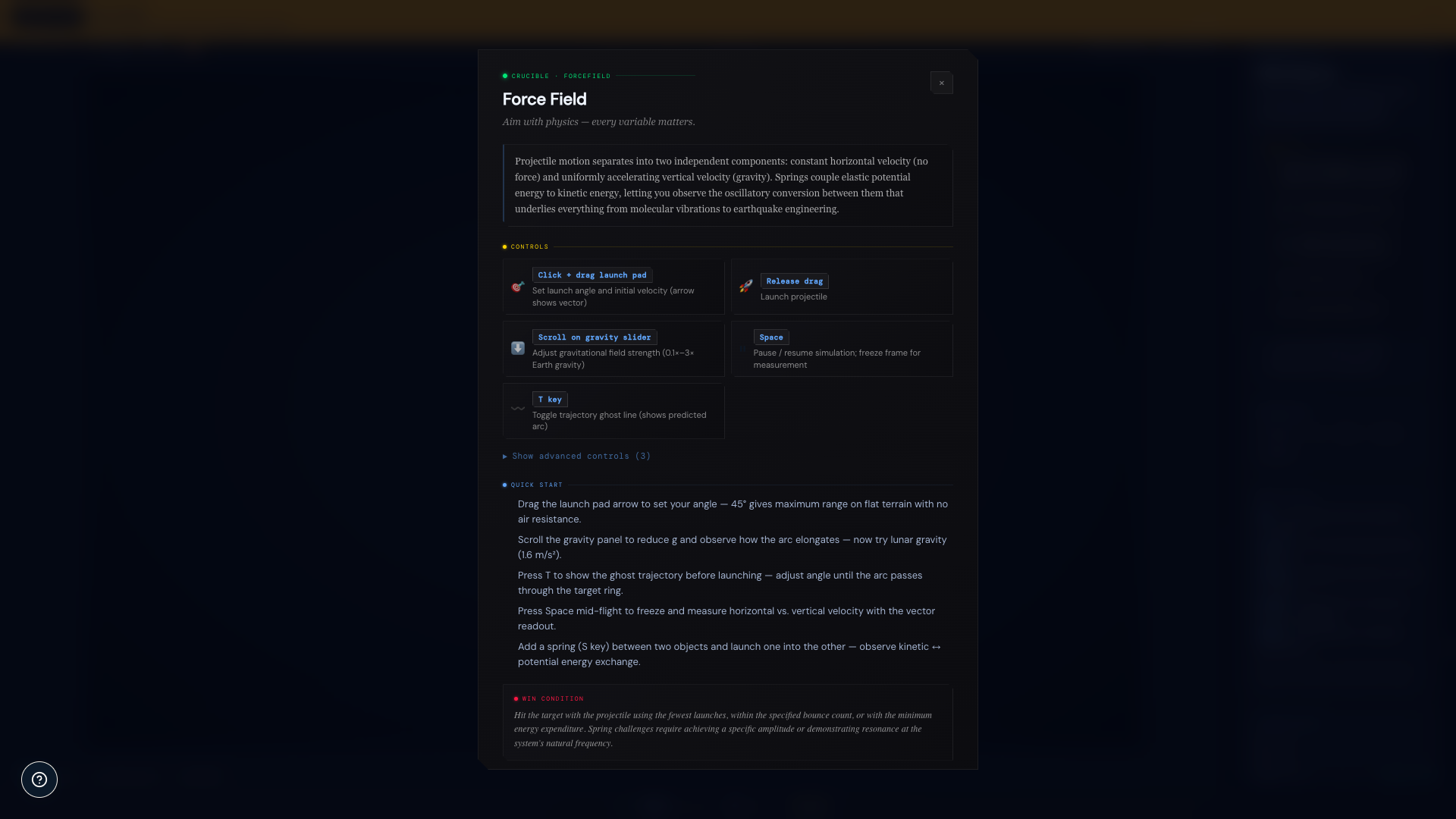
A tutoring model without measurement is a black box. A measurement engine without a tutor is a test. QLM closes the loop: measure, teach, verify, improve. The assessment IS the learning and the learning IS the assessment — across 7 cognitive dimensions, on every interaction. Including 10 dedicated math modes.
Three capabilities that turn cognitive data into teacher action — no AI prompt engineering required.
Every simulation session measures 7 cognitive dimensions. Every interaction feeds the adaptive engine. The profile sharpens continuously — not once per semester.
Research shows AI tools without cognitive measurement cause "joint cognitive erosion" (67-study PRISMA review, 2026). QLM is the measurement layer.
| Capability | QLM Crucible | Open-Source Sims | VR-Based Sims | Textbook Labs |
|---|---|---|---|---|
| Adapts per student | Yes — mission-level | No | Limited | No |
| Measures mastery (not completion) | Yes — per skill | No | Partial | No |
| NGSS standards report per student | 124 PEs mapped | No | Manual | No |
| Cross-discipline prerequisites | 37 modes linked | No | No | No |
| Built-in lab notebooks (CER) | Yes | No | No | Paper |
| K-2 through AP in one platform | 326 missions | Partial | 6-12 only | No |
| Works on Chromebooks | Yes | Yes | No (VR) | N/A |
| Cost | $3–5/student/yr | Free | $15–25/student | $50+ textbook |
Stanford's SCALE Initiative found that AI tools improve student grades while students have access to them, but gains disappear on independent assessment. QLM Crucible was designed from the ground up to protect the productive struggle that causes durable learning:
Three research findings that shaped QLM's design:
Every simulation IS the assessment. The system knows what students understand because it watches them think — not because it grades their output.